
Honey explained · 5 min read
Raw honey vs processed honey:
differences, benefits & facts.
The words on a label can mean different things to different sellers. Ask what happened between extraction and the jar, and keep claims about benefits in proportion.
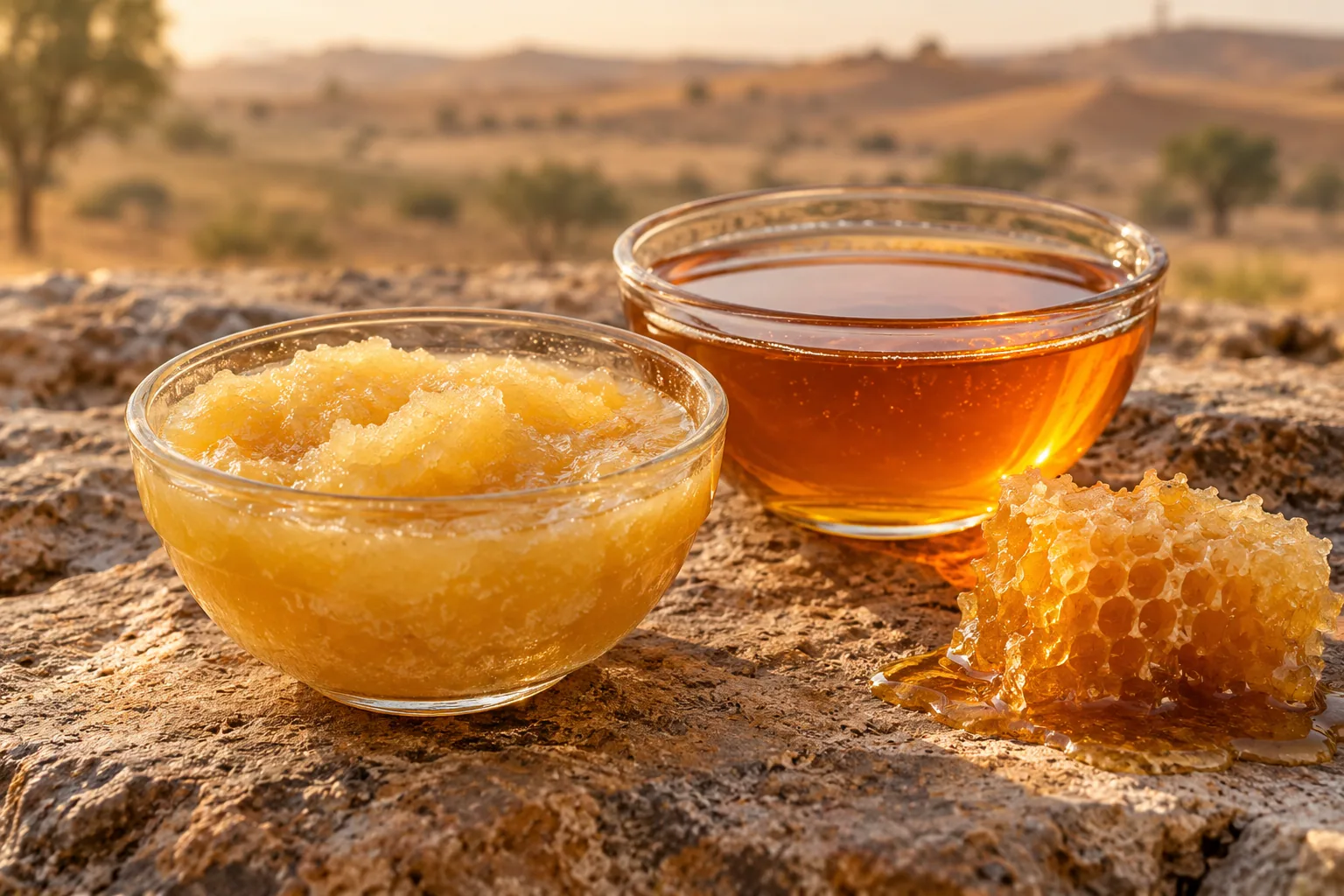
Honey is extracted and prepared for storage and sale. Depending on the producer, it may be strained, settled, gently warmed, filtered, or packed with more minimal handling. “Raw” is commonly used to suggest limited processing, but it is not a universal description of every step unless the seller explains what they mean.
01
What can “raw honey” mean?
Many sellers use “raw” for honey that has not been heavily heated or finely filtered. The exact meaning can vary, so ask the producer: was the honey warmed, how was it strained, and was pollen or wax removed? A clear answer is more useful than the word alone.
Raw does not automatically mean wild, local, unfiltered, or laboratory verified. Honey from managed hives can be described as raw, and wild gathered honey may still be strained or otherwise handled for bottling.
02
What does processing involve?
After honey is removed from combs, it is commonly separated from wax and other particles, then settled and packed. Producers may warm honey to make it easier to handle or filter it to achieve a clearer look. The extent of these steps differs by producer and product.
Honey sold as honey should remain honey and should not contain added sweeteners. Handling such as warming or filtering varies by producer, so ask what steps were used and check the product label and any available batch documentation.
03
What about the benefits?
Honey’s flavour, aroma, colour, and natural composition vary with source and handling. Some components are sensitive to heat, but a “raw” label alone does not show the amount of any compound in a jar or establish a health benefit. Do not choose honey as a treatment based only on marketing language.
Raw, processed, wild, and farm honey are all sweet foods. Sugars naturally present in honey count toward free sugar intake, so use it as a sweetener and keep portions in mind. Read our evidence-led honey and health guide.
04
Crystals are normal
Honey can crystallize naturally; this can happen to minimally handled or commercially processed honey. Texture varies with the nectar source, sugar balance, temperature, and storage conditions. Crystals are not, on their own, evidence that honey is fake, raw, or superior.
Keep honey sealed and dry. If you want a softer texture, stand the closed jar in warm water and stir gently after it loosens.
05
Questions to ask before choosing
Ask the seller to define “raw,” describe filtration and heating, share the harvest location and batch details, and explain any purity or health claim. Compare that information with the label and any available test documentation. For more checks, see our pure honey guide.
TharNectar’s promise is that our honey is gathered by local people in Thar and has no added syrups, flavourings, or artificial ingredients. We describe its origin and ingredients plainly so you can decide whether it suits you.
Local honey · Gathered in Thar
Why TharNectar honey may be your best choice
TharNectar's distinction is its stated source and ingredient promise: honey gathered by local harvesters in Thar with nothing added. Ask about handling if filtration or heating matters to you, and choose it for its Thar origin and flavour rather than assuming that “raw” or “wild” alone proves a health advantage.
Explore both TharNectar honey sizes