
Honey sourcing · 5 min read
Wild honey vs farm honey:
what’s the real difference?
Both can be real honey. The main difference is how bees are kept and where they forage—not a guaranteed difference in purity or nutrition.
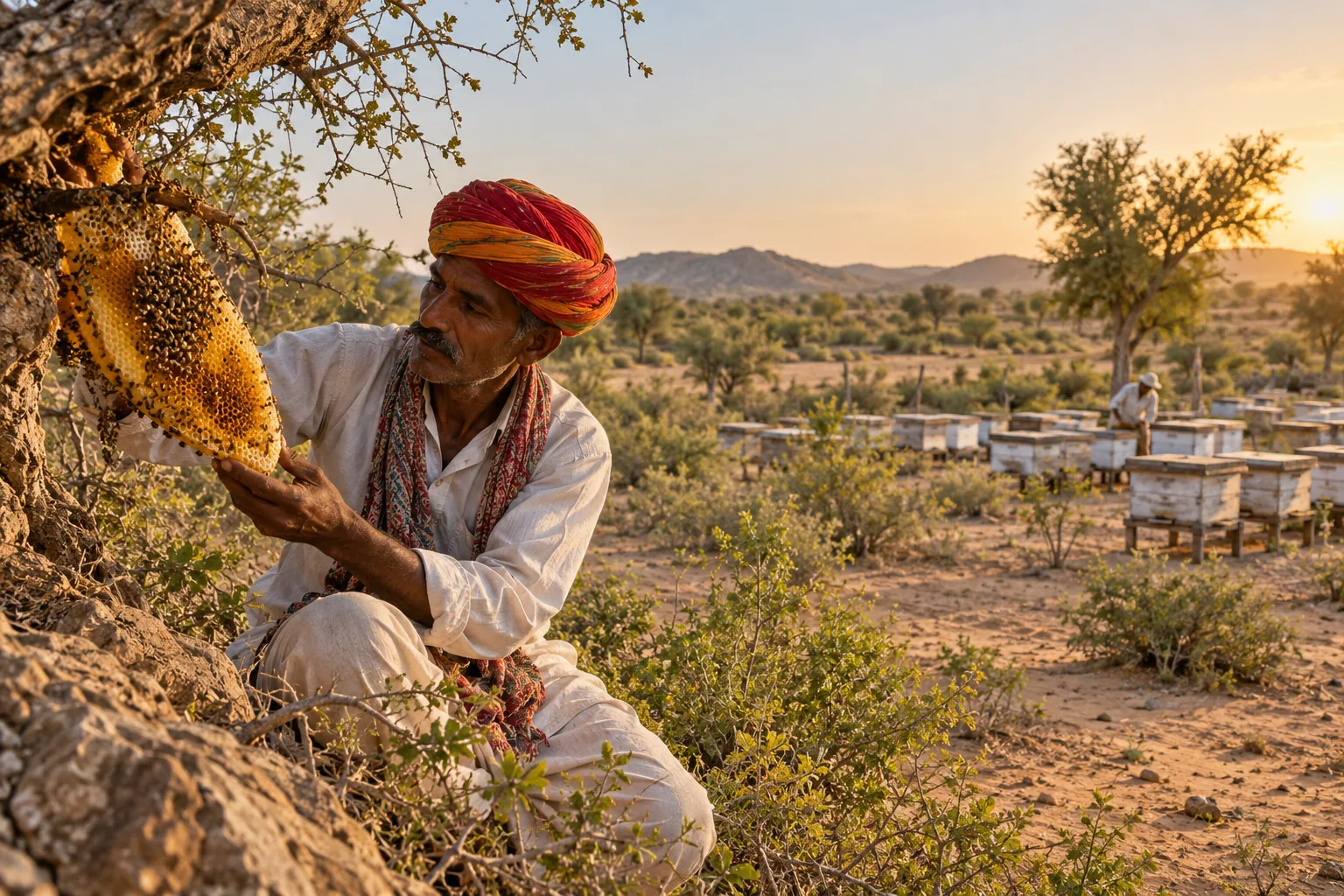
“Wild” usually describes honey gathered from colonies living in a natural setting, while “farm” or apiary honey comes from managed bee colonies. Real-world practices vary, so the label is a starting point. A clear source story and careful handling matter for either kind.
01
Where the bees live and forage
Wild gathered honey comes from bees foraging in the surrounding natural landscape. In an apiary, beekeepers manage hives and may move them to follow flowering periods or keep them in a particular location. The bees’ forage, weather, and season all influence a honey’s colour, aroma, and taste.
“Wild” does not necessarily mean a single flower source, and “farm” does not automatically mean a single floral source. Ask what the producer means by the label and where the batch came from.
02
How harvesting and supply can differ
Local harvesters may collect honey from naturally established colonies; beekeepers harvest from managed hives. After extraction, either honey may be strained, settled, packed, transported, or warmed for handling. Practices differ, so ask about the actual process instead of assuming from the category.
For a wild harvest, ask how the source is documented and how collection is carried out. A responsible seller should be able to describe their practices honestly.
✳
At a glance
| Question | Wild gathered honey | Farm or apiary honey |
|---|---|---|
| Bee setting | Colonies forage in a natural setting; local conditions vary. | Bees live in managed hives, sometimes moved by the keeper. |
| Human role | Local gatherers locate and collect a natural harvest. | Beekeepers maintain hives and manage harvest timing. |
| Flavour | Can vary with the landscape, blooms, and season. | Can vary with floral source, location, and season. |
| What supports quality? | Traceable origin, honest handling details, and suitable testing. | Traceable origin, honest handling details, and suitable testing. |
03
Does one type taste or perform better?
There is no universal answer. A buyer may prefer the distinctive flavour and local origin of wild gathered honey; another may value an apiary’s batch consistency or a particular floral variety. Honey’s characteristics depend on source and handling. Neither “wild” nor “farm” alone proves that a jar is pure, safer, or nutritionally superior.
Both kinds are sweet foods. Honey is still a source of sugars, so choose it for the flavour and source you enjoy rather than a promise of a health effect.
04
What “wild” means at TharNectar
TharNectar describes its honey as gathered by local harvesters from Thar’s natural landscape, rather than produced in farm apiaries. The honey is brought from local gatherers to customers with no added syrups, flavourings, or artificial ingredients. Those details are our sourcing and ingredient commitments; they do not mean every farm honey is adulterated or that a wild label replaces testing.
See our Thar Desert Honey details and the guide to honey authenticity for questions to ask any seller.
Local honey · Gathered in Thar
Why TharNectar honey may be your best choice
TharNectar is a strong choice for shoppers who specifically want honey gathered by local hands from Thar's natural landscape and supplied without added syrups, flavours, or artificial ingredients. Farm honey can also be a good choice when its source and handling suit you; the best fit depends on the origin and taste you prefer.
Explore both TharNectar honey sizes